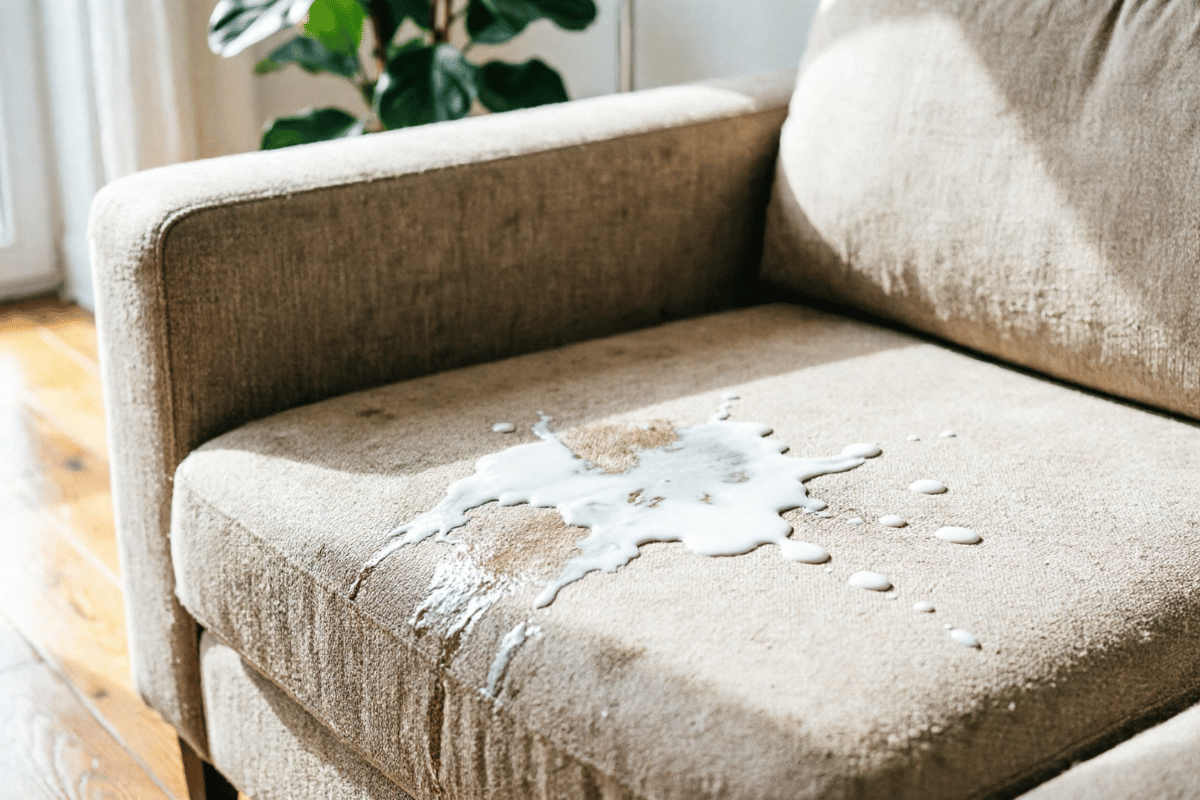
Removing milk odor – why stain cleaning first and then ozone treatment works
Spilled milk leaves behind not only a visible stain. It seeps deep into carpets, upholstery, and insulation materials, begins to decompose, and develops an intense, sour smell. Anyone who wants to permanently remove milk odor must therefore first eliminate the source of the odor and only then use ozone against odors.
Why does milk odor come back after cleaning?
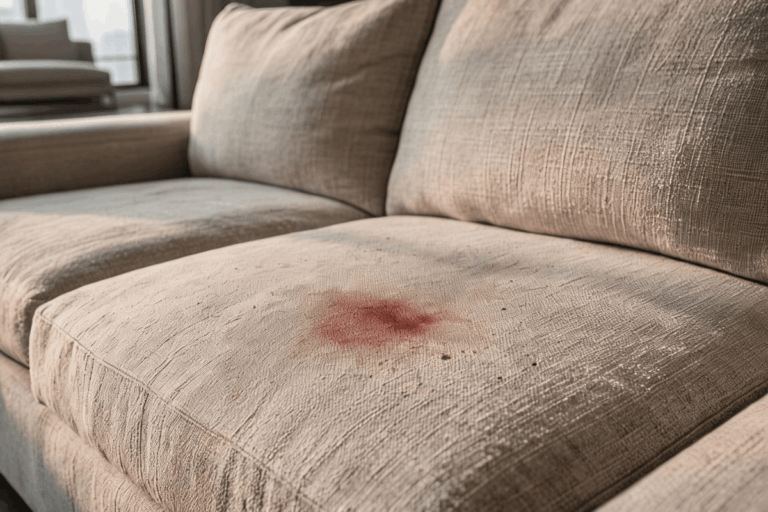
Milk contains protein, fat, and sugar. When these components get into a carpet, car seat, or upholstery foam, organic residues remain in the material after drying. Heat and moisture accelerate their decomposition—so the smell can suddenly become stronger after a few days. Scent sprays or briefly airing it out only mask it.
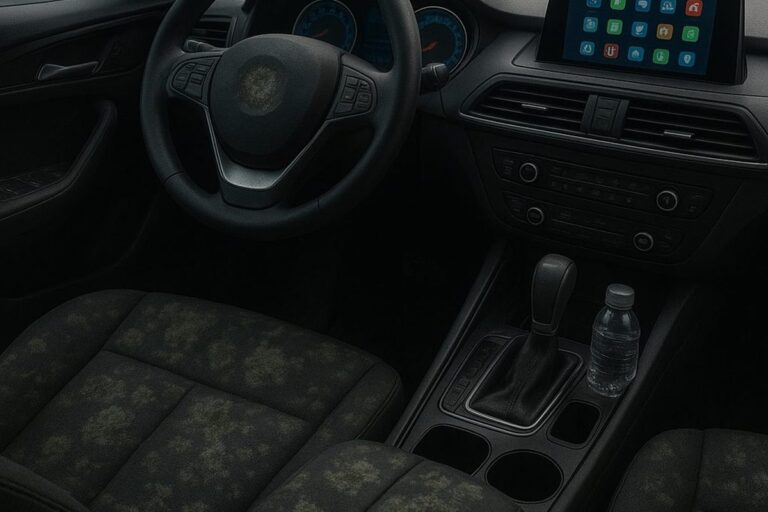
It is especially difficult to remove milk odor from carpet when the liquid has seeped into the backing or the flooring underneath. Anyone who wants to remove milk odor from a car should also check seat upholstery, floor mats, carpeted flooring, and hard-to-reach gaps. As long as milk residue remains in the material, the odor will return despite treatment.
What makes it particularly tricky is that the residue can remain inside the material even after superficial cleaning. If it later becomes damp or warm again, the odor-causing processes are reactivated. A temporarily neutral smell therefore does not automatically mean that the cause has been completely removed.
Why must the stain and milk residue be removed first?
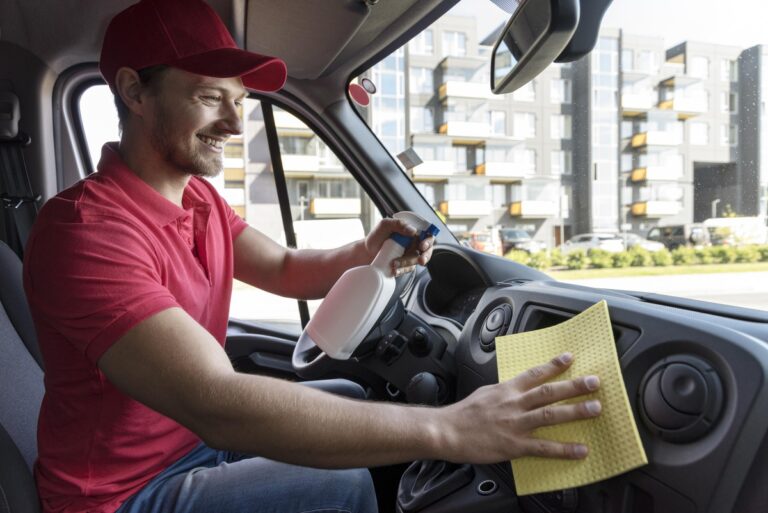
The first step is intensive stain cleaning. Fresh milk should be absorbed as quickly as possible, without spreading it further through the fabric by rubbing it strongly. The affected material must then be treated with a suitable cleaning method that not only loosens the residue but also removes it from the fibers and upholstery.
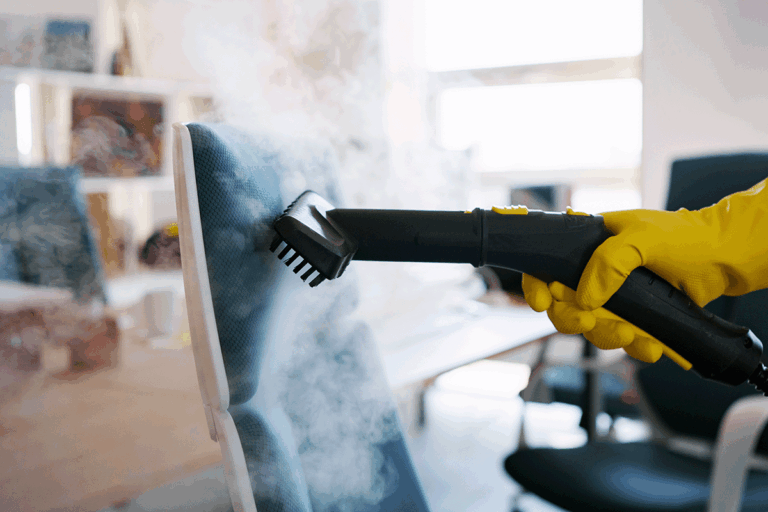
For older or deeply embedded stains, superficial cleaning is often not enough. In that case, carpets, upholstery, or car seats must be deep-cleaned, rinsed, and dried completely. Only when fat, protein, and milk residues have been removed is the actual source of the odor eliminated. The same principle applies when you want to effectively remove cigarette smell from the apartment : first the affected surfaces are cleaned, then neutralization follows.
It is also important to adapt the cleaning method to the respective material. Too much water can transport milk residue deeper into upholstery or carpet layers, while unsuitable agents can leave stain edges or damage delicate fibers. A professional deep cleaning therefore creates the necessary basis for the subsequent ozone treatment to work permanently.
Ozone treatment with MoClean24


Effective disinfection
Ozone reliably removes bacteria, viruses, mould and odours.

Odour neutralisation
Eliminates unpleasant odours at the source – rather than simply masking them.

Safe & environmentally friendly
Chemical-free and residue-free – safe for people and the environment.
How does ozone work against remaining odors?
After stain removal, a professional ozone treatment can be useful. Ozone spreads throughout the interior and also reaches crevices, textiles, and hard-to-access areas. There it reacts with the remaining odor-causing compounds. It does not mask the milk smell, but neutralizes the odor molecules still present after cleaning.
However, ozone only works particularly effectively once the actual source of the odor has been removed. If milk residue is still deep in the material, the unpleasant smell can reappear after some time.
In vehicles, the treatment is carried out after thorough interior cleaning. In living spaces, depending on the extent of the spread, a residential ozone treatment can help. During the treatment, no people, animals, or plants may be in the area. Further information on the subsequent ventilation can be found in the guide lüften nach ozonbehandlung wohnung. The lasting solution always consists of two steps: completely remove the milk residue and then professionally neutralize any remaining odors with ozone.
Frequently Asked Questions (FAQ)
We want you to feel reassured from the very beginning. That is why we answer the questions our customers ask us most often here – clearly, transparently, and understandably. So you know exactly what to expect from MoClean24.